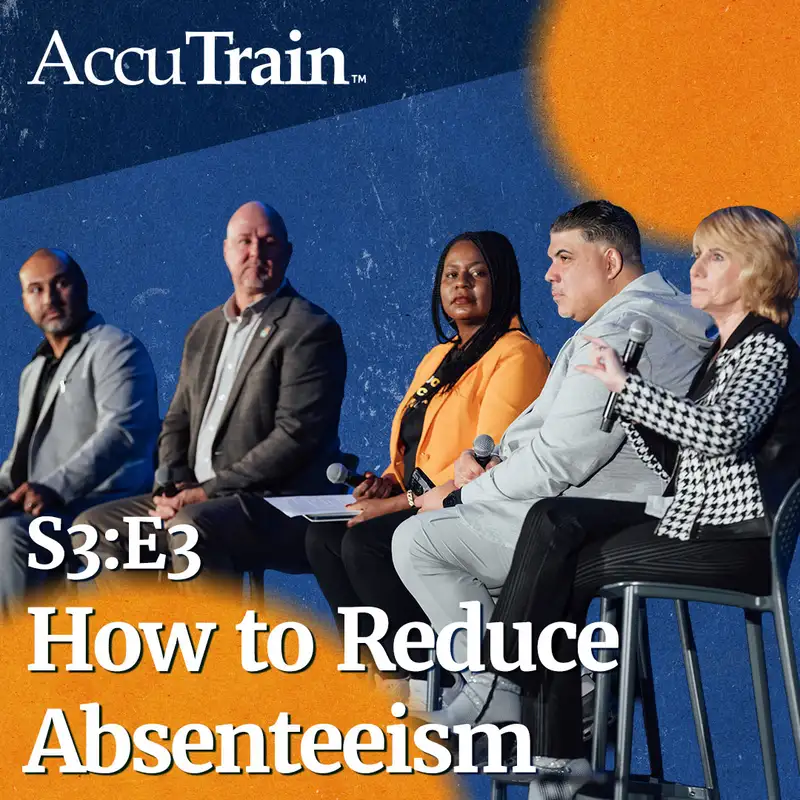
On this episode of the Innovative Schools podcast, you get to hear from five different expert educators on how to increase attendance in your school. Come on. Let's learn together. Hey, educators. It's Jordan.
Jordan Bassett:So on this episode of the Innovative Schools podcast, we're doing another one of those fifty fifty panels from our Innovative Schools Summit. This one is specifically from our San Antonio summit, happened in December 2025. And the topic on on this fifty fifty panel is 50 ideas about how to increase attendance in your school. It's something we've been seeing going on in different schools of kinda getting kids to come to school for whatever reason. And so here are 50 ideas, at least 50 ideas, on how to help bring kids back into the school for education.
Jordan Bassett:So
Jordan Bassett:grab a
Jordan Bassett:piece of paper, grab a pencil, whatever, sit down, and listen to these ideas, and let's see what we can learn together.
Kevin Stewart:So we're gonna start off, let them introduce themselves real quick, and then we'll get going.
Charles Williams:Good afternoon everyone. My name is Charles Williams from the Chicagoland area. Twenty years in education, first time out of the schools and classrooms. So getting to do this type of work full time now.
Dr. Darren Pepperd:Good afternoon, everybody. Doctor Darren Peppard. Twenty six years in public education, the last four and a half. I'm now the lead innovator for Road to Awesome. I coach and support and speak about leadership all over the place, just helping leaders be as clear and intentional and walk in their purpose as possible.
Sharon Bradley:Okay. My name is Sharon Bradley and just finished twenty five years in public education. For the last four years, I've been an education consultant, founder, and principal consultant of Restorative Flow Educational Solutions, where I support districts across the country building strategies and systems to increase school attendance.
Moses Oheda:Hello, everyone. Moses Ojeda out of New York City. Thirty two years in public schools. I actually am fortunate to lead the school I graduated from. So I lead a 13 CT program school with 2,100 students and currently still in that role.
Moses Oheda:And last year, I'll share with you the highlight of my career was that my daughter graduated from my school and I gave her the diploma as the father and the principal.
Dr. Tracey Severns:Oh, that's awesome. That's awesome. So good good afternoon. I'm doctor Tracy Summers. I am from New Jersey, and I work with schools and help teachers and leaders do better by kids.
Dr. Tracey Severns:Awesome.
Kevin Stewart:So we're gonna get going. Grab your pen, your paper, your iPad, your iPhone, your Android, whatever you wanna take notes on. You're gonna get 50 strategies in the next fifty minutes. And there are strategies that you'll be able to take back, implement, use, begin to put into place. So if you're ready, they'll also we're gonna put them on the screen so you'll be able to see them on the screen as well.
Kevin Stewart:So if you feel like you're missing it, don't worry. You'll see it up there. And if you're ready, you wanna start? Alright. Let's go.
Kevin Stewart:Alright. Let's do this thing. So I
Charles Williams:think the first one that I wanna talk about, and it's something that has been brought up throughout this conference. And I know you've heard something similar because I was in those sessions with you and I heard them. It's about changing our mindsets, about how we're labeling those students. So oftentimes we say things like they're chronically absent or they're truant. And those words sound harsh and they sound negative, and it's how we then approach those students.
Charles Williams:Because nobody likes a chronically absent student or a truant student. But what if we started labeling them as students who need help belonging? Because the truth is they're missing school for a reason, and belonging might be one of those. So just starting to reframe how we're looking at our students. And so I wanna start off with that one before I dive into all my strategies because I really think mindset is important.
Dr. Darren Pepperd:That's awesome, Charles. I'm gonna build right on that one. How many of you like Chick fil A? I love Chick fil A. There should be more hands than that.
Dr. Darren Pepperd:Right? But here's the thing. Chick fil A is founded on a culture of second mile service. And the whole idea of second mile service is just going that extra mile for any customer who comes at a store. If you say thank you to a Chick fil A employee, what do they respond with?
Dr. Darren Pepperd:My pleasure. My pleasure. They've been taught that intentionally. So what if we, building on Charles' idea, what if we take that second mile service and go a little bit further and actually give our teachers and our paraprofessionals and our front office staff words that they can use when a student comes back instead of nice to see you or boy, you've been you've been gone the last nine days. What if instead, I'm just so really happy to see you.
Dr. Darren Pepperd:Welcome back. Something like that. So build a script. Go with that second mile service.
Sharon Bradley:Okay. Well, guys, you know, it's hard to walk into a building where you don't feel connected to anyone. So my strategy is to focus on school connectedness, to make sure that students are connected to a trusted adult, that they're connected to their peers, that they're connected to an activity or club. Think about, you know, your band students, your football players, you know, because they are connected to a school in some sort of way, research supports that they're more likely to come to school. But we have to be intentional about that.
Sharon Bradley:Connectedness just doesn't happen just by being in the same space.
Moses Oheda:I'm gonna piggyback on everyone and say relationships are key. So one of the biggest things that we did when we were leading an initiative like this at our school was to get to have the students come in with the families and have conversations. Why is this happening and how can we support you? And you'd be surprised at some of the things that got in the way of getting to school or or or that they wouldn't show up. And so customizing the support for those students meant a lot, and then we paired them up with teachers who would check-in on them.
Moses Oheda:And sometimes it was just a phone call in the morning just to say, please get up. This is your wake up call. And that started to raise attendance.
Dr. Tracey Severns:I think it's important to seek first to understand. There's a lot of different reasons why kids don't come to school. One of the things I think it's it's really our obligation to do is to seek to understand what is the student's experience in school. I think one of the most eye opening things you could do is randomly select a student and spend a whole day living their lived experience in your school. And what I will tell you is this, the longer you have been in your school and district, the less you know about what it's like to be a student in that school.
Dr. Tracey Severns:I know as a middle school principal, I randomly selected a student and I followed her through the day. And by third period, she looked at me and said, doctor Severins, you're really creeping me out. Why are you wherever I am? You know what? I spent the whole day.
Dr. Tracey Severns:And most people who I challenge to do that don't make it through the day. If you wouldn't make it through the day, they might not either.
Charles Williams:So I saw something not too long ago, which I thought was really interesting. It was a father and a son, and what they did were they started creating these walking school buses. So in their community, what they did is they just simply walked through. They picked up little ones along the way, and they walked them all the way to school each and every single day to school and back home. And I think about how many times when I was an elementary principal, I'm putting my babies, kindergarteners, first graders, second graders into Ubers and praying that they're getting home.
Charles Williams:I would never dream of putting my child in an Uber. But how many of them don't have any other choices? So if you had a walking school bus, a collection of individuals who walked through the neighborhood, picked up little people along the way, and so that way they could get to school safe and sound. So walking school buses.
Dr. Darren Pepperd:One of the most important things that we did when I was a high school principal, we were faced with with really, really heavy absenteeism. We were running at about 84% average daily attendance. And so we decided, let's set a goal. Let's decrease absenteeism by by a certain percentage, and this is what that number would be. And then everything that we focused on was on at that goal or above that goal.
Dr. Darren Pepperd:Don't focus on perfect attendance. Perfect is demoralizing. If you set a goal at 95 and you wanna recognize reward and reinforce any kid for attendance, make it any kid who's at 95% or higher.
Sharon Bradley:I like that a lot. You know, we always talk about and and Tracy, you were saying, you know, seek to understand. Understand the root causes as to why kids are not coming to school and try to remove the barriers of whatever standing in the way, but I wanna add a little bit more to that. I want us to honestly be careful because we as educators are sometimes the barriers through our exclusionary disciplinary practices and and different things like that or how we interact with students on a daily basis. So do not be the reason why a child chooses not to come to school or to your class.
Moses Oheda:I mentioned before, we lead a school with 13 career and tech education programs. So one of the big pushes we have is to bring industry partners to speak to our students. Right? 2,100 students are enrolled in one of those 13 programs, and the first thing they let them know is that attendance is key. That's the first thing they look at when they hire.
Moses Oheda:So we make that a priority. If you're not doing well in that class, they're okay with that because technology changes so much that they can provide you that content, that knowledge. So that's a big push we've been having at our career fairs to make time to discuss attendance and then how we can support you so that you can apply for the apprenticeship or the internship because that's how we tie it also to make it meaningful.
Dr. Tracey Severns:So once you have spent a day in your students' UGGs or cons or or or shoes, Then we can move to my second strategy which is question storming. Now many times we talk about brainstorming where the focus is on finding the answer. Sometimes the solution is about finding the questions and asking my favorite phrase which which is what if. What if we change the kind of assignments? What if we change who greeted the kids?
Dr. Tracey Severns:What if we change the amount of what if so that we open our hearts and minds to new possibilities and look to solve the things during the day that might be creating disincentives for kids to come to each school to to come to school each day.
Charles Williams:So the next one I wanna recommend is a family breakfast club. Alright. A few of you. Thank you. So a family breakfast club.
Charles Williams:You can imagine, right, those of you who are parents, those of you with little ones, my wife and I, we have five daughters. So you could imagine what breakfast was like in our house as we're trying to scramble and get everybody together. So imagine a family breakfast club. The entire family gets to come in and have breakfast at your school, mom, dad, their child, student, And now you've eliminated one of those barriers. I'm not rushing around and I'm running late for that.
Charles Williams:Potentially, you're also solving another issue of maybe we're struggling because we didn't have food in the house. And so now you could come in and have breakfast here. You're building community. You're hitting so many different spaces. And all you're simply doing is providing a meal already in the building, so they're already there.
Charles Williams:And for those of you ready to say, well, listen, there's grants and there's funding and there's issues. You there are many, ways to work around it. I used to tell my cafeteria staff, listen, when they start yelling at you, point them in my direction because we give away free food all the time because I'd rather give it away to families and to students than you throwing it out at the end of the day. So cross that bridge when you get there, but in the meantime, take care of your people.
Dr. Darren Pepperd:Velvet, I'm not gonna let you hear the end of the breakfast club thing. So let let's stick with food for a few minutes. Right? Because everybody loves to eat. So again and and everything I refer to is not gonna be perfect attendance.
Dr. Darren Pepperd:It's whatever your goal is or higher. So let's say it's 95%. That's just what I'm gonna rock with for for the rest of this session. So any student who is 95 or higher, pull this report every quarter, pull it every month, pull it every week, whatever you wanna do. Just pull that report on a regular basis, and any kid who is at or exceeding that goal, and this works really well for junior high, middle school, give them a front of the line pass with five minutes early out of the class right before lunch.
Sharon Bradley:Oh, I love that front of the line pass. Everyone wants to be in front of the line for lunch. I love that. A suggestion or a strategy I would like to share is, yes, when we notice when kids are beginning to miss, we begin to call home. And we wonder why parents don't pick up or we don't get the response that we're looking for.
Sharon Bradley:As early as possible in the year, start making positive phone calls. You know, just take a moment to say, hey. This is Sharon Bradley from ABC Elementary. I just wanna say, miss Jones, that Johnny has done a great job today. He opened the door for the young ladies today.
Sharon Bradley:I look forward, you know, to spending time with him this year. The reason why you do this is because when you have to make a call of concern, whether it's attendance or anything else, they're gonna remember that number. And the last time that they answered the phone call and they saw that number, you said something positive. So make a positive phone call before an attendance call.
Moses Oheda:That's awesome. We don't do that enough sometimes. Something we tried the last two years, whenever we hold an event where it's a paid event for students to travel to, it could be going to a great adventure or an amusement park, museum. Whatever we host, if you have 95 plus attendance, we take care of half of that cost. You have 90 plus, we take care of maybe 75% of that cost.
Moses Oheda:And so we're boosting and encouraging them. The higher attendance you get, the better rebate you'll get to go on these trips and you'll be able to go on more trips because obviously we know that some families can't afford to send kids to everything. But
Charles Williams:Yeah.
Moses Oheda:We can help them out and incentivize attendance this way, and it's been working well.
Dr. Tracey Severns:Another thing to do is to address what is sometimes referred to as reentry shame. The longer kids have been out, the harder it is to come back because they feel uncertain. So we've had students create little videos or strategies so that we say to kids, we missed you, here's what you missed, and we build that bridge for them to reenter without feeling uncomfortable and behind.
Charles Williams:I appreciate that one because I was like, man, she's gonna take my idea. But one of them was that idea of peer attendance. We know that all of our students were better or worse, they have connections to each other. So what if each student in your classroom chose two or three of their peers that when they were absent, those peers sent them a quick message and just said, hey, we miss you. Hope everything is okay.
Charles Williams:Because so many times as we've been talking about up here, it's it's about that connection. If I miss a day of school and nobody notices that I'm gone, it's a horrible feeling. And why am I rushing to get back? But if I know that my peers have noticed that I'm gone, if I'm getting messages from them, hey, can't wait to see you tomorrow, there's gonna be a sense of encouragement for me to say, you know what? Let me try to make sure that I'm there tomorrow.
Dr. Darren Pepperd:So I'm gonna say the quiet part out loud. If our instruction is not relevant, if everything can be done on Google Classroom, why do they need to be there? This is what I hear so often from so many schools that I work with. I was in three schools in Omaha, Nebraska earlier this week. All three schools, exact same thing.
Dr. Darren Pepperd:The one of the number one challenges when they sit down and they talk with their students about poor attendance, especially for juniors and seniors, it's I've got a 98 in the class. I can do everything on Google Classroom. Why do I need to be here? We need to take a good hard look at what we're doing in our classroom and make it not only something that requires them to be there, but that makes them want to be there.
Sharon Bradley:Oh, yes. And we're all educators in the room. And as educators, what do we do? We teach. So when a kid doesn't know how to read, we teach.
Sharon Bradley:When a kid struggles with math, we teach. So if we begin to notice certain behaviors and and gaps in certain things, what should we do? We should teach. So take the time to teach and provide explicit instruction on ways that kids can set themselves up for success, whether it's in the morning, whether it's after school. Like for instance, I had a student, middle schooler, talk to the mom.
Sharon Bradley:The mom said, hey, I'm sorry. My kid wants to get out of school. He's exhausted. He takes a nap. Well, he takes a nap until 09:00 and he stays up and he games all night.
Sharon Bradley:And then in the morning, he can't get up in the morning. So what are the things that we can do to teach our kids, to empower them, to set themselves up for success each day to come to school?
Moses Oheda:That's great. I I think we have to do more also things that they can do after school to incentivize them come to school with clubs. I meet with a student input committee every month, about 20 students by grade level nine through 12. And I always discuss two things at this meeting. What's working well at Edison, which is our school, and what needs to maybe improve or what can you recommend.
Moses Oheda:And so sometimes we'll discuss attendance and incentives, and so they said, you know, Ohida, you give out award bills or Edison bucks so we can use in the school store, so we can get swag, but it's hard to track. How about we incorporate that into our new app? So we're able to talk to the vendor and they incorporate it and they wanted to call it Aura Points because I guess Aura is a hit word now. So now the kids can show up to their soul store and they have their aura points and they can cash it in. And so we incentivize attendance as part of that.
Moses Oheda:So that's another great strategy we use.
Dr. Tracey Severns:I worked with a school that created a well, I guess, what was called Barrier Busters. And it was a fast acting, really agile team that could get together very quickly and come up with solutions to obstacles that we were learning about that were getting in the way of students coming to school.
Charles Williams:So I know Moses just mentioned Aura, but if you check us out, we both got the Riz too. No. I'm joking.
Moses Oheda:What really happened is we
Charles Williams:read the memo. So the next thing I wanna talk about is just like the idea of community schools. We talked so much up here about taking away barriers and think about all the reasons why students don't come into school. Sometimes it's not a matter of I don't want to be there. It's saying I don't wanna be there because of this situation.
Charles Williams:Maybe my my clothes are dirty, my uniform is dirty. Maybe my my I don't have a good haircut. And I know when some of you might scoff at that, but that's a huge piece. Right? And so what if we created spaces for those things?
Charles Williams:I know in our building, had a pantry that was out every Tuesday. We're giving away food. We had washers and dryers donated so students can do have their laundry done for them while they were there, so they never were had to be in dirty uniforms. We had barbers come in and actually not just teach a barbering class, but then giving away free haircuts. So trying to eliminate some of those barriers of to why I'm not coming to school.
Charles Williams:And I know, again, some of you might be like, well, that's that's a silly reason not to come to school. Darren and I have no idea what it means not to have that great haircut. But for some of our students, it's a huge reason for me not to show up.
Dr. Darren Pepperd:So I'm a huge, huge advocate for the Johnson's Renaissance model. Shout out to PC back there in the back, Johnson's Renaissance ambassador. But the whole idea behind Johnson's Renaissance is PBIS on steroids. The whole concept is know what it is that you wanna see and then recognize reward and reinforce it like crazy. So probably the next six or seven I'm gonna give you are those.
Dr. Darren Pepperd:And the first one I'll give you is academic and attendance pep rallies. Now we've all been doing athletic pep rally. They're a lot of fun. But let's be honest, a lot of our kids just kinda sit up there in the in the rafters and they're just kinda tuned out on that. Why not recognize reward, reinforce the things you wanna see from your kids academically, attendance, behavior, play some rock music, hand out a bunch of candy, have awesome t shirts, and that kind of stuff that only your kids who are meeting and exceeding your goals get the opportunity to be recognized.
Dr. Darren Pepperd:That to me is a huge huge piece right there. Every single kid who's meeting and exceeding your attendance expectations gets the opportunity to get recognized like a rock star in that pep rally.
Sharon Bradley:Alright. As you kinda look at your data, you may see that most kids or some kids are absent on test day. So working with counselors and other, you know, social workers and other support staff on your campus to teach test taking skills and, you know, coping skills so that kids can feel equipped to be and prepared and calm to take tests on the actual day and not be absent. Because those test days, they add up.
Moses Oheda:Something that sometimes we don't think about is the flexible schedule that we might be able to provide to students. And so at a high school level, I think it's a lot easier to be able to do that. Sometimes it's just a matter of asking and having conversations as to why they don't come in. And sometimes because they have to do something in the morning, maybe they don't wanna come in because they're gonna run into an adult who's gonna embarrass them. Why you late, oh, Johnny, again?
Moses Oheda:So in those conversations, we've been able to easily just manipulate that schedule. And I think, obviously, it's afforded us now with some remote learning things that we can put in place to help that student achieve that attendance that they need, but also to lessen that load. Sometimes they have other responsibilities we're not aware of, and their parents rely on them for that. You know, it's part of that family culture, so I think flexible scheduling is another key factor.
Dr. Tracey Severns:When I was a principal in a k eight school, we created attendance ambassadors. We found that the young students really cared what the older students, thought. And when we built relationships and connections and the big kids were checking on the little kids, we found that that was a real incentive. And some of the some of the parents would say, you know, I was I told them you don't have to go in today, but my child made me bring them in. So students can be very much a part of the solution.
Charles Williams:One of my thoughts are is having some sort of a welcome back station. I know as a teacher, my my wife's a teacher. So one of the things is, right, I come back in, hey, teach. Did I miss anything? Like, no.
Charles Williams:We stopped class because you weren't here. I'm joking. But right, I'm coming in and I want to jump back in. So having a space where I know I can go, so I can get caught up, I can see what was missing, and that way again, I'm not feeling overwhelmed. I'm I don't feel guilty for missing because the reality is after a while, it starts to build up.
Charles Williams:And why am I gonna come back? Because now I'm just feeling overwhelmed. I don't know where I'm at. I'm feeling lost in class. But if I know there's a space in the classroom, there's a routine when I come back in, whether it's because I was sick or a suspension, whatever it might be, hey, welcome back to class.
Charles Williams:Collect your things here. And then maybe the teacher could have a little debrief with them, but they're having that routine of settling back in and getting ready ready to go.
Dr. Darren Pepperd:So I mentioned that the name of my company is Road to Awesome. Let's also let's see the name of my book, all kinds of different stuff. Right? We branded our school, the road to awesome. We were on this path where it was a toxic culture.
Dr. Darren Pepperd:We were all about catching people doing things wrong. It was punishment to gain compliance. And and one day it all flipped. Somebody asked a question in a big staff meeting. They said, Darren, why does it always have to be about what they do wrong?
Dr. Darren Pepperd:Why can't it be about what they do right? Bang. Two roads. Right? You guys all know Robert Frost, two roads diverged.
Dr. Darren Pepperd:Right? So for us, let's take that other road. Let's take that road that maybe takes us to someplace awesome. And one of the things we did with Road to Awesome was every single month, any kid who was meeting any of our goals, and we actually did this with what we call the Road to Awesome card. It's kinda like a PBIS card, catch them doing it right.
Dr. Darren Pepperd:But every kid who got a Road to Awesome card, we did a barbecue for them during lunchtime. Any kid who had a Road to Awesome card got to come to the Road to Awesome barbecue.
Sharon Bradley:A suggestion or a strategy that I would like to share is emphasize the importance of attending school at already scheduled events. I mean, think about how many parents come out to, like, band concerts, choir concerts. I mean, we live in Texas. Football games, putting it on the Jumbotron, you know, and things like you have a captive audience. When you have the school, when you have the community, we have the families who are all given the same message is very powerful.
Moses Oheda:So once these kids attain the attendance because they've been receptive to the supports, we tend to move on to the set of kids who haven't yet been receptive. Right? And I feel like we forget those who are doing well. We gotta keep them engaged and motivated so they don't fall back or regress. Right?
Moses Oheda:So for me, what we started doing is special invites where the kids don't know why they're being invited, but it could be a breakfast, could be a lunch, could be a trip. And then they're told that the reason you're here is because you've maintained or you continue to attain this type of attendance. So keep it going because it'll be more like this. And what's nice is they have no clue because they're not tracking attendance, we're tracking attendance. Right?
Moses Oheda:So when we hit them with a percentage and it's a surprise and they feel rewarded, it makes them feel good and they continue to show up. So that's also another tip.
Dr. Tracey Severns:So in my previous strategy, I shared the role that students could play. Certainly, adults can as well. And many times we think to assign an individual adult to a particular student, some students need more than one adult. So we took the highest risk students and sometimes gave them three mentors because some kids needed to be missed. They needed to know that they mattered to more than just one assigned individual.
Charles Williams:So I know a a moment ago, I mentioned bringing in the community, but one of the other things is just health based clinics with inside your school. Most of the time when we're talking about these attendance issues, at least the spaces I've been in, I've always been in title one schools. And you you could use those title monies to bring people in. So instead of missing school because of a dentist appointment, missing schools because I have to go get an eye test, missing school for this, miss bringing those in. I cannot tell you how often times we have this large space where our kids were in there getting their teeth cleaned and I would love to walk in because I was like, hey, this is what I'm gonna practice my dentistry.
Charles Williams:And they looked at me with abject horror like please don't. Right? But having those opportunities within your school and it's a lot easier than you think because a lot of times these resources are already sitting there. So if you're in one of these spaces a title one school for example dive into it and look because those medical providers would be more than happy to come out to you and provide those services.
Dr. Darren Pepperd:I'll just call this one scoreboard. I think I think if you're very, very clear about this is what we're trying to achieve and this is exactly where we are and we're constantly keeping people updated on where we are, it's amazing what will happen. And I'll tell you this will work extremely well at the elementary level, middle school level, and high school level. At the high school level, we did three diff or four different thermometers, one for each grade level, And it was constantly updated on where we were specifically at in terms of trying to get to our attendance goal. Which class had the highest attendance, and the class that had the highest attendance, they had some incentives that came their way at the end.
Dr. Darren Pepperd:Middle school, same type of deal. I'll tell you at the elementary school where I was a superintendent, we did the same thing, but we had a scoreboard right outside of the library. And every time the students walked by that library, they got to see that scoreboard, and they knew which class was getting the most PBIS points, which class had the best attendance, which class had earned all the different PBIS rewards, that type of thing. So the more you can put it in front of them, keep it visible on a scoreboard, I think that's a great incentive.
Sharon Bradley:And to your point, yes, incentivizing students is great. But I would also like to add, how can we find ways to incentivize parents? You know, like for instance and you know, low cost. Like for example, most schools have a website and most parents have Facebook. A lot of times they go, you know, all the parent Facebook groups.
Sharon Bradley:Right? How about we have, like, you know, parent attendance champions or or something like that when we know whether it's once a month or whatever that sweet spot is. If their child has met the actual threshold, whether it's 95% or whatever, we can list the parents name because guess what's gonna happen? They're gonna take that link and they're gonna share it with their friends on social media. And we know on social media, you know, there are some positive peer pressure because they probably say, okay, you were a parent attendance champion last month, where's that link this month?
Sharon Bradley:And it it is is healthy and it's a way to support and incentivize parents. And then also, how can we incentivize or recognize the support staff, the people who are making the phone calls, the people who are sending the letters, the people who are doing the home visits, all the things to make sure that kids are coming to school and keeping them engaged.
Moses Oheda:The power of partnerships. We've been meant we've talked about it here and there, but I I'm a firm believer that if you can partner with local communities, service providers, shops, food, if they can support the school by giving a discount, a voucher for a student for doing well, then not only is it going back to the community, but everybody's benefiting from that. So the power of partnerships is not something that should be taken lightly.
Dr. Tracey Severns:And in addition to goals and recognizing kids who met certain thresholds, we found that introducing kind of a random fun way to recognize kids really worked as well. So we created pop up privileges where kids we just kind of like, hey, congratulations. You're here and you're here on time. Here's a voucher for a snack in the lunchroom. Here's a voucher for a ticket to the game.
Dr. Tracey Severns:So when we added that kind of random surprise to the goal setting, we found that that was a nice compliment.
Charles Williams:Absolutely. And, you know, we would do some of those same things at the beginning of the day as they're coming in through the door. Hey, you're here. Right? But then we also started extending it throughout the day only because we had some high schoolers who were like, I got my prize.
Charles Williams:I might dip out a little bit earlier. So it wasn't just at the beginning of the day. Sometimes we just did random ones throughout the day. Right? You're here third period.
Charles Williams:You're here seventh period. And we pull a report and just recognize and honor those students. So they never really knew again when it was coming, but it just imagine having that opportunity to say, I'm just being simply celebrated for being in class. And sometimes, like we talked about, those students, maybe I'm struggling. Maybe I'm at I'm at that sixty, seventy, 80%.
Charles Williams:I'm not getting all those other awards, but I was in class today when I'm supposed to be here. I did my very best to get here, and now I'm being celebrated in a small way simply for that. Right? Growing that encouragement.
Dr. Darren Pepperd:I work with a school in Virginia that this year and they're about 2,100 students. This year, they decided that they really wanted to lean heavily into check-in, check out to try to increase their attendance. So students that are absent, there's somebody that's gonna check-in with them. But instead of leaning into their teachers and putting more on their teachers' plates, they said, you know what? We have a lot of wonderful people, wonderful human beings in our building who would love to get to know kids a little bit better.
Dr. Darren Pepperd:So they leaned completely into all of their classified staff. And now the classified staff are going and finding the students when they have returned to school, making sure that they call them by name. Because so often, and and what they did was they listened to their kids. Kids would say, I come back to school, I go to class, nobody even notices or acknowledges that I was here or that I'm not, that I am here today. So now having each of these individuals go and check-in with these kids every single day, it's making a tremendous difference in their attendance.
Sharon Bradley:Give students something to look forward to coming to school or to your class on time. As we know, absenteeism, it it doesn't just start there. It starts with, you know, early signs of disengagement, tardiness. And depending on your grade level, you know, what works for your campus. Some, you know, campuses, they take certain students and assign them a job.
Sharon Bradley:Give them purpose. There are some campuses that have like a morning movie club. Yes. Kids watch movies and stuff all the time, but they don't watch movies like together. I had a campus that had a movie club and every morning before school started for thirty minutes, they watched a certain part of the movie.
Sharon Bradley:The next day, guess what? They were hounding their parents to get them out of the house because they wanted to watch the next part of the movie together. Another suggestion, especially middle school or high school, if the students are, like, double block in math or double block in reading, they don't typically have a PE or anything like that. So I had one of my campuses my previous campuses to have, like, a pickup soccer game in the morning or pickup basketball game, and kids loved that. So giving kids something to look forward to in each morning.
Moses Oheda:Sports is a great way to capture their attention and have them come in, so I'm glad you said that. I'm also someone who believes in reacting quickly and being first. And what we started at Edison a couple years ago is a leadership program where our seniors, especially because they go through an interview process, we want those kids who had a compelling story that turned it around. To be the leaders that mentor the incoming ninth graders. We started to see a trend that some ninth graders did not just feel connected to the school, they didn't come from middle school with friends.
Moses Oheda:Sometimes they were the only ones there, so they would not come into school, stay home, and then they transfer out. By implementing this leadership program, we do icebreakers once a week with them. Our students push into classes, and they get acclimated to the ways of Edison. But more importantly, they start to make connections with each other. I think the most powerful thing that I saw was a freshman who high fived one of our basketball players, which made me think about this, and he was our star player.
Moses Oheda:And the friends around the freshman were like, yo, you know him? And the guy was like, yeah, that's my peer group connection leader. And so that gave that kid clout to be like, you know, I know someone there and he would go to the games and he was incentivized because if you don't maintain attendance, you can't get into the sports events either. So that's another opportunity that you can implement.
Dr. Tracey Severns:One of the things we did is we kinda jazzed up morning announcements. Sometimes they're like, like, so like boring or so we added a morning mission where we issued a challenge. Can you find the hidden hornet? Can you find the teacher who, you know, just add a challenge to the day? I know every day when I get up, the first thing I do is my little New York Times puzzles.
Dr. Tracey Severns:I love that feeling of when I get the Wordle or connections. And so we found that when we issued kids kind of a challenge that added a little bit of fun, that was only spoken during the morning announcements. Kids wanted to be there to hear it.
Charles Williams:I too love Wordle. So one of the other things I've thought about was this idea of leveling up, allowing your students to level up. They they many of them love video games. In fact, one of the attendees in one of my sessions today was bragging about how he's in an executive suite because his points on his card for Marriott bumped him up. And I was like, wait.
Charles Williams:I wanna level up. Right? And so imagine the privileges that you might have depending on the level where you're at with your attendance. If you're just at bronze level, hey. I'm sorry.
Charles Williams:You don't get to have that early lunch special. But whatever it might be, whatever makes sense in your space, but allowing students to level up, there's an encouragement there. Right? I'm not punishing you, but there are privileges associated with leveling up. I'm on a one hundred twenty nine day Wordle win streak, by the way, Tracy.
Charles Williams:Oh, okay.
Dr. Darren Pepperd:I'm gonna I'm gonna hate myself tomorrow. I probably will miss. Okay. So I wanna build on something that I said just a little bit ago. When when we first started into our journey of trying to repair this 84% average daily attendance, we started brainstorming as a staff.
Dr. Darren Pepperd:What you know, what's the problem? Why is this continuing to happen? And and and somebody at a point said, why don't we just ask the kids? You know, we have this tendency to think that we need to be the ones to solve all the problems, But if we actually sit down and have a conversation with our kids and ask I mean, we we have this terrible attendance with third period. And, I mean, I'm in I'm in looking at our master schedule like, okay, who is it that's making all the kids mad?
Dr. Darren Pepperd:Why are they leaving? I can't figure this out. Once we finally sat down and talked with our kids, what it was was the building principal at the time when kids came running in and, you know, high school kids, they get out of bed real early and they have their breakfast before they leave the house and no. That doesn't happen. They come rolling in with their Starbucks and their McDonald's.
Dr. Darren Pepperd:We had a trash problem. The principal solution was to make them throw away their stuff the second they walked in the door. So our kids were hungry. That's why they were skipping third period. Just sit down and have a conversation with your kids.
Dr. Darren Pepperd:Listen to them. They'll tell you why they're not there.
Sharon Bradley:K. On the Wordle tip, am I the only one who don't do Wordle?
Dr. Darren Pepperd:We gotta get you started.
Sharon Bradley:Oh, gosh. Alright. But as you know, we you have students who come to you from different districts, from different schools, from different countries, different states. So you have may have parent education sessions where you talk about the compulsory attendance laws and things like that. I challenge you to reimagine your parent attendance education forms.
Sharon Bradley:Yes. It's important to talk about the attendance laws and our policies and things like that, but parents don't want to be talked at. They want to be talked with. So in addition to giving that good information, how about you bring in a parent educator to talk about attendance promoting tips for parents? And then take a minute to stop talking and actually listen.
Sharon Bradley:There's a portion of our parent education sessions where we have kinda like a listening round. Allow parents to share specifically what they're dealing with. And honestly, I wasn't the expert in the room anymore. They learned from one another. Yes.
Sharon Bradley:I tried to problem solve as needed. But again, reimagine those parent education forms so that parents can get more from it, so they can support the kids and reinforce what we're teaching in the classroom and in schools.
Moses Oheda:I'm gonna definitely pick off of that because we did a parent forum Mhmm. Where we invited parents in on a volunteer basis, and we wanted to share best strategies amongst themselves. Alright? So some some parents maybe don't know what it takes to get a kid on schedule, how to get them to sleep early, and there might be another family that says, well, this is how we did it. This is how we worked it.
Moses Oheda:And so in that room, we're able to get some advice from parents who are doing it well, some parents that needed support, but then we publish that in a newsletter through our parent coordinator. And so as you push that out, those who didn't come in, they would read that and get some insights. Because I think sometimes our our parents are disconnected because they're doing so many things also. And so any way we can bring them into the school and make that happen, that's a a win for us. Thank you.
Dr. Tracey Severns:I'm a huge advocate also of asking the kids. I think there's a lot of intelligence right in front of us. What we sometimes need is a tool. So those of you who've been with me in a couple of my other sessions, I talked about a melosa. Not a mimosa, those are good too.
Dr. Tracey Severns:A melosa asks to improve attendance, what might we do? You ready? More of, less of, the same as. It is a really useful tool because kids will ask for more of what helps them, less of what doesn't, and keep on keeping on doing the things for the same as that are working for them.
Charles Williams:So I I think you were recommending that outside with coffee. We now have mimosas tomorrow?
Dr. Tracey Severns:Yes.
Charles Williams:Kevin? Kevin? So my last one here is we just talked about tools. In Chicago, we used something called the five essentials. I remember taking over a school attendance was horrible and I could not figure out we tried to do all the things.
Charles Williams:But I would recommend having a tool like the five essentials. It's a survey and what I found out very quickly was that my students said we don't feel safe, we don't feel valued, we don't feel loved, we don't feel heard. And it wasn't just my students to be honest, it was also my staff. And we shifted and we started really focusing on our people. Within two years, our attendance rate was at 97%.
Charles Williams:Now remember the district asking like, what was your secret? I was like, it wasn't a secret. We just started loving on our people more. And when you create a space where we talked about all this time, where I want to be, where I feel seen, valued, and heard, then I'm gonna show up each and every single day.
Dr. Darren Pepperd:Yeah. I'm gonna build build on that with my last one too. To me, I think attendance is not something individually that you focus on. Attendance is a symptom of your culture. And it's not culture individually, and it's not just culture, but it is a huge symptom, a huge indicator of the culture that is in your building.
Dr. Darren Pepperd:So I would advise very strongly, take a deep look at your culture. And that's looking at your culture from an instructional perspective, from a a relationships perspective, from a perspective in terms of how people speak to each other, what you have for expectations, how you hold those high expectations, all of the different things that are a part of what makes up a culture. Come to my session tomorrow. I'll take you through all of that stuff. But if you don't like the culture where you are, think about how you're leading it because that's where it starts.
Sharon Bradley:Oh gosh. I would say get off the island. Let's get out of the silos. People were talking about where they were from earlier. I didn't even get a chance to say.
Sharon Bradley:I'm originally from Mississippi and I live in Texas now, so I always say, you know, I'm Mississippi given, Texas living sort of chick. But my mom used to always say many hands make light work. And so when you have one person responsible for attendance or one person is doing the work and you have all the students, it's not going to happen. So build those attendance collaborative teams that you can meet on a regular basis. So you can talk about the trends, which what you're seeing, what's working, what's not working, looking at the data in order to do the good work without burning out your staff because our kids deserve more.
Moses Oheda:Culture is so big. I just wanna let you know that when when you get to a point where you have to kick kids out of school because you're closing it up, that lets you know you arrived at at that place that's special. But what if I was to tell you that you could probably predict when your kid's gonna be absent? I'm currently doing some work with generative AI and some leaders in New York City where we're uploading patterns and able to predict the next time a student or a group of students will be out because they tend to have a pattern. So so trying to perfect that method.
Moses Oheda:But I gotta tell you, when you pull those kids in and say, hey, you're thinking about cutting out tomorrow? Like, what? I I and then, you know, there's a girlfriend involved and another friend. So think outside the box. These are great strategies, and I know we can create even further or additional strategies.
Moses Oheda:But generative AI is something that we're using now to support us also.
Dr. Tracey Severns:Right. And a very low tech way to do that is to audit your truth using one of two strategies, index cards or yearbook pictures. So one is I've worked with schools we gave in homeroom low tech, man. We gave out index cards and we asked the students to write the name of who they would go to if they knew something or if they needed something. And I can't tell you how many students raised their hand and said, miss, what if I have no one?
Dr. Tracey Severns:We said, then leave it blank. And at the end of the day, we spread those cards out and you know what we found. There were some names that appeared on lots of cards of the adults, and there were some that were nowhere. I've done a similar activity with yearbook pictures. We cut the yearbook pictures up and we have two people, an initial, who you know.
Dr. Tracey Severns:And I don't mean you just know their name, but you know something about them. Who are the kids who you are leaving out in the shadows, out in the margins? So first, you've got to know your truth so that you can do something about it.
Kevin Stewart:Come on. Give it up for the panel. We got all 50 done. Yes. In under fifty minutes.
Kevin Stewart:Wow. So we got some great questions that came in. Thank you for submitting those. We're
Charles Williams:just
Kevin Stewart:gonna take the next few minutes to go over some of these questions. First question, and I'll let one of you take it, is how can you address absenteeism in rural areas where walking to school late or having a tardy bus isn't an option due to geography?
Sharon Bradley:Oh, that is tough. But I think as you were saying earlier, we have to be more flexible as to how we provide instruction. I mean, March 2020, it ended the the habit of coming to a building to come to school every day. And if we know that, you know, transportation is an issue, There are other ways, hybrid, you know, virtual, in order to provide instruction, but that is tough.
Dr. Darren Pepperd:So I was a rural superintendent, 425 kids in my whole district. We we did face this periodically, and I think that's where rural communities are so beautiful. Lean into the buddy system. Who are your friends? Who are the people that that you can help?
Dr. Darren Pepperd:You know, somebody can get that kid a ride or get over there and pick the kid up because maybe the parent is driving off, you know, thirty, forty, 50 miles to work and expecting their third grader to get up and and go to school. But I would say lean into the buddy system as much as you can. So
Kevin Stewart:we're gonna switch this a minute, and we had a couple questions come in about this. How many administrators do we have in here? Alright. I think these two questions came from one of you. So I'm just gonna ask one of them because they're both almost identical.
Kevin Stewart:What can we do to make teacher staff attendance increase?
Dr. Darren Pepperd:That's another fifty and fifty.
Kevin Stewart:Yeah. That's that's a whole another one. Moses? That's interesting.
Moses Oheda:We had an issue, especially after 2020, where what we've done now proactively is just send them a memo to say, hey, by the way, this is how many days you've been out so far. If you need some support, let us know. But be mindful that ten or more days is gonna lead to something that we don't wanna have happen. So being proactive in a nice way before you bring them in for that conversation is something that we've been doing at Edison now, is every marking period, we send out that memo just to give them a heads up. And we find out that most of the time our teachers are not aware that untreated and treated days all count in New York City as one.
Moses Oheda:And and so they can all be aggregated together where it can get you over to the 10 and then it would be an issue. So they appreciate that. We had some conversations. And this year and last year, since we started this, we've seen less and less teachers out.
Charles Williams:So I just wanna say something really quick. And I I would say this to my staff all the time. We talk a lot about teachers, how they need to treat students. A lot of what we talked about today was that the importance of making students feel belong, loving on your students, pouring into your students. You admin, do the same for your teachers.
Charles Williams:If you create that same space, do the same thing for your teachers as you do for your students, they too will show up. When I talked about my 97% attendance rating, it wasn't just my students. My staff came in almost every day because it was a space that they felt loved, seen, heard, valued. So when we talk about these things, these strategies, it's not just for the kids. Staff breakfast club.
Kevin Stewart:Oh, there you go. There's a new one for you. Here's here's another great one, and this actually had a couple as well related to the subject. In fact, I think one of you were mentioned in there SROs going to the home and and the whole team going. The question is, how do you engage with the parent of an absent student when they don't respond to home visits or phone calls and mail goes unanswered or is returned because the address isn't correct?
Dr. Tracey Severns:We found one of the best ways to reach the parents was at church. So we would we went to we went to the local churches, and found some some of the families there and did some support optional, but but we showed up for them. And when we really showed up for them, they were more receptive to what we had to offer. One of the
Sharon Bradley:things we did, most students have an emergency card and we will call the other, like, aunts or uncles or grandparents or other people on the emergency card in order to make contact, and we and we have success with that.
Moses Oheda:We have some tech savvy staff members that go on social media, and that's how we track them. So we're to find out where they are, where they're going, and so that's where we try to reach out to them. Go to social media.
Kevin Stewart:Are you using AI for that too?
Moses Oheda:No. Not for that.
Kevin Stewart:No. No. Okay. We'll do a couple more. One more is, how do we balance academic expectations with flexibility for students experiencing these absenteeism challenges?
Charles Williams:So we really suffered with this at the high school level, and one of the things that I oftentimes talked about was focusing on mastery. I think so many times we focus on the task, the paperwork, the worksheets, the whatever, and so it's like I was gone for this many days. We have all these worksheets to catch up on. Does it really matter as long as I can master the skill? So can we come up with other ways so we're not just focusing on a bunch of paperwork because teachers, you don't wanna have to grade all that paperwork either afterwards.
Charles Williams:So if we start to shift our focus from learning tasks and all of those menial things to can you demonstrate mastery, then it starts to shift everything.
Dr. Darren Pepperd:What he said.
Kevin Stewart:Alright. One last question here. How do you support the parent when the child refuses to attend and the parent has given up?
Moses Oheda:I mean, for me, I just make the time. I'm flexible to go visit, come come whatever time. I have to be 08:00 at night. I'll be there, then the conversation has to start. That's where we begin.
Moses Oheda:Everything is conversation. So seeing what it is and how we can partner together. I'm a firm believer in the in the triangle mindset, which is one point is the school, the other point is the student, and the last one is the parents. And we gotta remain strong at all at all times in order for this kid to be successful. So for me, it's whatever it takes just to be able to get there and just have conversations to see what it is that's happening.
Sharon Bradley:And then also it's all about building trust, building trust with the student, building trust with the parents. Of course, the last resort is true and support. We the goal is not to get kids to court. The goal is to get kids to class. And so, like in California, they started the attendance review boards, having a problem solving problem solving form where you have people who are there.
Sharon Bradley:You invite the student and the parent to let for them to share what's standing in the way the the campus so they can talk about what interventions have been tried. But you also have counselors and social workers that are there on hand to provide intensive immediate resources because that is a very intensive case. And instead of a judge having like a retired administrator serving as a mediator to get to the heart of the matter.
Moses Oheda:Yeah. I I just wanna touch because it it you just reminded me. I had a student and a parent who just didn't get along. Mhmm. You know?
Moses Oheda:Mom was was young and they just would battle. And it wasn't until after a few conversations in my office that they able to seek help. And have a mediator to help them. And thankfully, because of that, everything went well. I'll never forget, she's saying at our graduation.
Moses Oheda:And it was amazing end to that story is that she's doing well and she still comes back. So, yeah, we have to go out of our way to make that connection.
Sharon Bradley:And you uncover so many things. It could be substance abuse, mental health reasons, loss. Our kids are experiencing a lot of loss, whether it's family members, the life they once knew, and it all comes out in a space where they feel safe to share and be able to do so. And instead of people saying they're gonna do something, they're actually seeing it happen in action.
Dr. Darren Pepperd:I guess I'm I'm kinda drawn though back to the student and and that relationship piece with the student. You know, so often our students when when they get to a certain point, they they have that defeatist mindset or, you know, it's so much that I can't overcome that. And, you know, just simply being that person who can be the only person who doesn't give up on them, like, you know, kinda like Moses was saying to to kick his off. I think the more that we just continue to be resilient and and not give up on a kid and just let that kid know that, hey, even just even just showing up tomorrow is an improvement over over everything else. Just just one little step at a time and look for a little bit of progress.
Dr. Darren Pepperd:Again, I think it's all about relationships.
Jordan Bassett:Well, there there it is. That whole session from the Innovative Schools Summit in San Antonio. Some wonderful ideas around attendance and how to help get those kids back into the classroom. I hope that you're able to listen with an open mind of thinking about ways that you can take those ideas either in their current form or making some slight modifications so that you can use them in your school or your classroom. I just wanted to thank you guys for listening to this episode and just to encourage you guys to keep doing what you're doing.
Jordan Bassett:We say it all the time on the podcast that education is hard, and you guys are on the front lines, and we love everything that you do. We would love to be able to share more of this with more people, so we ask that you kindly like and rate, subscribe, leave comments, any of those different things. But thank you guys for listening, and we'll see you on the next one.