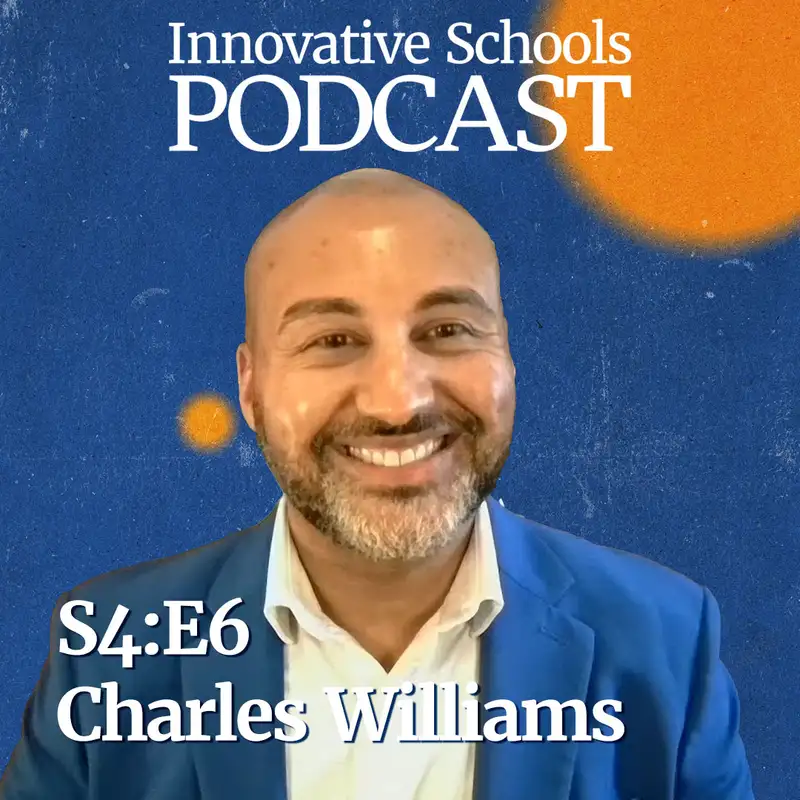
On this episode of the Innovative Schools Podcast, we're joined by Charles Williams, and we talk about what it means to lead from the middle. Come on. Let's learn together. Hey, educators. Welcome to another episode of the Innovative Schools Podcast.
Jordan:Jordan and Will again, back to back, the duo. Yeah. Yeah. It's cool.
Will:Yeah. We're vibing.
Jordan:Mean We are vibing. Yeah. Are you okay? You seem kinda shocked over there.
Will:I'm not shocked. I'm just cold.
Jordan:Oh, okay. I did tell him to make it colder in here because I had a long sleeve shirt on and you went short sleeve. Yeah. I had a few That's years the description for our audio only listeners. Yeah.
Jordan:Yeah. Yeah. Anyway, so we're back. We got another episode here for the Innovative Schools Podcast. Will, let me ask you a question.
Jordan:Mhmm. Have you ever been into... In a situation where you, like, kinda saw that there were things that needed to be corrected or things that you kind of wanted to fix or start or be a part of. But you kinda felt like you couldn't because it really wasn't part of your job description or what you felt like you were allowed to do, I guess.
Will:I mean, absolutely. I think what sticks out to me first is when I used to work at Chick fil A before Accutrain. Like, I never left the base level employee status, but my responsibilities kind of grew outside of that. But there are still things I wanted to do differently and set up differently, but I had no actual power or pull to...
Jordan:No official stated, like, title given power.
Will:Exactly. Yeah. Yeah. Yeah. I I think if maybe if I had really tried maybe some things, but I I would shoot myself down with this feeling of, well, I'm not I'm not a director.
Will:I'm not a manager. I'm not a shift leader. Like, it's not gonna matter. Yeah.
Jordan:Yeah. Yeah. Yeah. Basically that... I I'm not sure if anyone's gonna listen to me or if I can do it or if I'm allowed to
Will:Yeah. Yeah.
Jordan:Kind of thing because you don't you don't have that manager Title on my What are Is that what they call it? A Chick fil A manager?
Will:Well, technically, they're called directors.
Jordan:Okay. Cool. I was... Did a director. Didn't...
Will:And to use a term that everybody knew. Fair enough. Fair enough. I appreciate you
Jordan:trying to help us all along. Learn. I've been known... I've been called someone who doesn't stay in their lane. So I feel like I have the other...
Jordan:The opposite. Not problem, but I'm constantly going outside. And sometimes I kinda get my hand slapped a little bit for doing things outside of what I'm supposed to be. Not supposed to. I'm doing the things I'm supposed to be doing.
Jordan:Yeah. But then I wanna do more things. I see problems out of it. So, like, Yeah. That's been my...
Jordan:Kinda my experiences trying to find the right place to focus Mhmm. What I want to, like, kind of improve. Yeah. And we're talking about this, listeners, not just for fun banter, but it's kinda what we're talking about today with our guest. Talking about, like, those little areas and things that you can lead beyond what your title says.
Jordan:I wanna just start by saying everyone here, Will, me, and I'll speak for our guest. He can correct me later if he wants. But we wanna first just recognize the number of things that educators have to do. Mhmm. That there are a lot.
Jordan:And we understand that and we get that. We don't wanna add more to that plate, but I think our hope is is that we can encourage you all or educators to maybe take just a little bit more of a step to potentially make things better for students or even for yourselves if things that you see kinda need help and need some... I don't know exactly what to say, but just not to go as far outside your lane as I do. But maybe not feel so trapped by titles as you did. Yeah.
Jordan:But find that right kind of like middle ground to lead well where you are because teachers are the leaders of their classroom Yeah. At minimum. Principals and assistant principals are leaders of their school, but all that kind of stuff. But... So to get into it, we have Charles Williams with So here's Charles.
Jordan:And that's kind of what we're gonna be talking about. Now, Charles, do you have an experience or something kind of like when I was asking Will of feeling kind of trapped by your title or wanting... I'm I'm gonna go with yes. So I'm just... This is really feeding you a question here that we want, you know, we know it's gonna be there because this is something that's kind of close to your heart of kind of leading beyond your title.
Charles Williams:Absolutely. I was gonna say it would be really bad if... I'm like, you know what? No, I don't. So
Jordan:No. Never had it.
Will:Attended my sessions. Sorry. Completely unrelatable, actually. I
Charles Williams:have no idea what I'm talking about. No. Yeah. I started as an AP. Like, you know, most people on their trajectory, I started as an AP and then willingly voluntarily moved from principal back down to an AP.
Charles Williams:And it was that going back into that role, recognizing the uniqueness of leading from the middle, right, knowing that I have to answer to a principal, but I also have my staff, my teachers, the people in the building that I'm also responsible for. And figuring out how do I navigate this new space after sitting in the principal seat for so long. And I was fortunate enough to have a great co AP, Driscoll. So if he ever watches this, like I loved being a co AP with him. But he was he was brand new to it.
Charles Williams:So it gave me an opportunity to help guide him along the way. And it gave context and a format almost to what I was experiencing and understanding, which now I get to share with others. So definitely have been in that position more times than I care. But yeah, you're right. Like, you have the title or the the...
Charles Williams:Maybe a title, but you don't really have a lot of power, but you... Or authority. I automatically thought of, like, Cartman. Like, you will respect my... But immediately, thank you.
Charles Williams:I was like, man, that that just went wrong. But leaning into the idea of influence, and and that's really what drives the con... I think our conversation today, but also that workshop.
Jordan:Yeah. For sure. So, let's take one step back, though. We kinda jumped into that question.
Charles Williams:Sure.
Jordan:Can you tell us a little bit about your education journey? What you did in education, where you are now, and how you kinda ended up with this? You said the phrase first leading from the middle. You talked about it just a touch, so maybe we don't need to spend a whole lot of time on that. But we were talking before the podcast just a little bit...
Jordan:Before we started recording a little bit about the schools and stuff that you were in. Can you just tell our audience a little bit about your history in education?
Charles Williams:Absolutely. So I think first and foremost, I always tell people, look, I didn't want to be an educator, and yet here I am rocking it out and killing it. But I I didn't want to be an educator. My grandmother kept telling me, oh, you're going to be an educator. I said, absolutely not.
Charles Williams:And I did not go to school to become an educator in any way shape or form. I went to school, studied communications and English. I was going to be a PR person out there changing the world, one disaster at a time. And I found myself at a school. I think I shared with you, you know, in high school I became a father.
Charles Williams:So graduating college, I was a young single dad of two girls and a job came along and I was like, yeah, I'm going to take it because I need a job. Right? And it was at a school and it was a little bit of PR work. But almost immediately they started asking, well, you can you teach an English class? And I absolutely fell in love with it.
Charles Williams:Went back to school, did a whole transition to teaching program, got my masters, was teaching English. And like most admin, I thought, how can I do more of this? How can I make a bigger impact? And so I went back to school, did the whole admin thing. And so I started off teaching in the same district where I grew up in Hammond.
Charles Williams:Actually, one of my first schools was in my elementary school and I got to teach...
Jordan:Oh, that's really awesome.
Charles Williams:Yeah. I I got to teach with my fifth grade teacher. And everybody else was like, mister so and so, missus... Or like first names, but for him it was mister Hayes. Like, I could not call I could not do it.
Charles Williams:And and, you know, I just... I moved from teacher to quasi admin. I quickly became a mentor teacher, quickly became teacher leads. And then I was asked to step in for an AP. And I did that for a little bit and they were like, can you stick around?
Charles Williams:So the next year I was an AP and then the next year I was principal and I have no idea how that trajectory happened. But I was paranoid and terrified because I was a principal with one year of AP under my belt. But I sat in the principal seat for a decade and I spent time in the charter schools in Northwest Indiana before moving to Chicago. I remained in the charter schools in Chicago and moved over to the district space. So I led schools for over a decade, became an AP for CPS.
Charles Williams:For us, that Chicago Public Schools, I know a lot people are like child protective services, like, no.
Jordan:Yes. Good distinction between the two.
Will:Yeah. Exactly.
Charles Williams:And then I I ended my time in schools as an AP. So I spent a few years in the district. And now I'm consulting full time for a company. Spend most of my time in Indiana. I support school here in Northwest Indiana, the Gary Public Schools, and I do work with charters across the state.
Charles Williams:And so it's an incredible opportunity to really just support schools and leaders as they are engaging in this transformational work. And so now my job is to guide them through that process. So that's been my journey thus far.
Jordan:Yeah. No, that's cool. I find it so interesting the number of, professional educators that we talk to that start almost that same way. Well, I never set out to be an educator. Yeah.
Jordan:And they just found themselves there. It seems so much more like a calling that finds you than a calling that you find, you know, that that kind of section. I just always find that great... Just interesting, I guess, as as as a little thing. And part of your consulting work, just real quick, not to sit on this too much, is you do come and you present at some of our Innovative School summits from time to time.
Jordan:So that's how we've kind of gotten to know you and heard the things that you talked about and thought you'd be good to to bring on to the podcast. Just, That's you
Will:how we connected. I saw him and I would... I called him. I think I went up to him and I was like, hey, do you have a do have a card
Jordan:or something? I want to
Will:have you on the podcast. And I think your response was like, you know, I've been wanting to be on, you know? I've been watching a lot
Charles Williams:of my friends. I'm like, okay, all right, guys. When's it my turn?
Jordan:Well, here we are. Here we are.
Will:We are. Better late than never, you know? But we're gonna...
Jordan:We're very exclusive here at the... We're not. Not. We're not. But anyway, so that's great.
Jordan:Thank you for for accepting the invitation humbly to be on the podcast. But let's talk about... You said the phrase earlier, leading from the middle. Can you give us the Twitter definition of leading from the middle?
Charles Williams:Yeah. I think it's really simple. It's do you... Are you responsible for individuals in any way, shape or form? And then do you answer to someone?
Charles Williams:Right? And so you're leading from the middle. Are you responsible from taking this mission, this vision, these ideas, and turning them into concrete actions by leading that down? And are you also responsible for taking the feedback, concerns, insights, and leading that back up so decisions are being made? Then you're leading from the middle.
Charles Williams:And so sometimes recently, even individuals like, right, principals are like, well, I'm not technically leading from the middle. I'm like, well, do you answer to somebody at central office? Well, yeah, like, well, okay. So you're leading from that middle, right? It's a different type of middle, but most of us are responsible in both directions.
Charles Williams:And whenever you find yourself sitting in a space that I'm trying to make change, but I don't necessarily have the authority behind the role or the title. That's how this all started. And those were the individuals this was initially designed for.
Jordan:Sure. So I mean, in a nutshell, pretty much everyone at some level is leading from the middle. And so to put some definitions from what I'm hearing you say on onto this is like the classroom teacher, you are collecting feedback and things from how teaching strategies and stuff are working with your students. Right? Is this a good way to think about it?
Jordan:That's coming into you and you're leading those students. But you also have responsibility to your principal or your assistant principal or department head or, you know, something along those lines that are above you. Likewise, like you kind of already said for, like, a principal or administrator, you... They have authority and leadership over teachers, over classroom educators, but they're reporting to... At the district, superintendents, things like that.
Jordan:And you can kinda just follow that chain, I guess, continually up, and you're always kind of in the middle. So that's kinda what you're saying is that we find ourselves kinda constantly between those two things of people that we're reporting to and people that are reporting to us. And that leading in the middle is kind of that definition. That's what I'm kinda getting from what you're saying.
Charles Williams:Yeah. Absolutely. And and and really when you're feeling powerless, right, coming back to that space of it doesn't feel like I have any authority to do something that needs to be done because I... That power is not necessarily connected to my title role. And that's really the meat of this concept.
Charles Williams:Right? It's focusing on, well, you may not have that authority, but you do have influence. Right? And so leaning into And so even though I might be a principal and sometimes I might actually have legitimate power, but there might be scenarios that I'm in like, I don't really have a say so over this.
Jordan:Mhmm. Why... From what you've seen, I guess this is... This might be a multi part kind of question is, why has this become important to you? And why do you think this concept in looking at Leading from the Middle should be important for educators?
Charles Williams:So I think for me, it was super important as I transitioned from a... Like the decision maker, right, into a space where I'm now supporting the decision maker. And as much as I would love to tell everybody that, oh, it was an easy transition. There were moments I'm like, well, when I was a leader, this is how I would, right? And so I think it's really important for individuals to understand that as I think leadership is shifting, and we're moving away from this idea of like a power over to power with and shifting from that authoritarian kind of space to how am I sharing space?
Charles Williams:How am I sharing this But you can influence them. Right. And I think that as leaders, that's where we... I'm seeing this trend in general of less reliance upon I'm going to have this power over you because that's very short lived and you're focusing more on compliance than you are anything else. And maybe you're getting some results, but it's not long term, it's not quality to the space of I want to lead with you.
Charles Williams:Right? And so I'm going to rely on the influence that I have as opposed to that power over. And so I think that's super important as if you're a building leader, like a principal or an AP, if you're a teacher of recognizing the importance of that shift. Because if we want sustainable change, if we want that long term change, if we want to be Okay, because any teacher will tell you when you try to control a group of students, the stress levels and what it does to your psyche, like Mhmm. If you really truly want that change to happen, then there is power in learning to lead with and leaning into influence as opposed to relying on that authoritarian approach.
Jordan:When when you're using the word change, like making that change, what kind of changes and things are you you thinking about and kind of referencing? I don't know if it works to kind of do it as like a answering the question from like the classroom level and then... And maybe the the administration level. But let's spend a little time kind of defining that change and stuff that you're talking about.
Charles Williams:So for me, that that changes this concept of just becoming sustainable. And it's one of the things that I've often now talked about because we joke, right? Or I guess it's not a joke, but we celebrate that five year mark of teachers. Like if a teacher reaches five years, like we're celebrating and it's such a low bar. When we talk about school admin turnover, sometimes it's less than that.
Charles Williams:And I remember sitting in this, this was a CPS meeting. We had like weekly, biweekly meetings with the CEO. And one of my colleagues passed away. He was young, late thirties, maybe early forties, passed away, heart attack. And we were all like, man, he was so young, right?
Charles Williams:And so during this meeting, there was like, let's address the elephant in the room. We're going to acknowledge his passing, a moment of silence, you know, recognize the need to take care of oneself. And we talk a lot about that, right? Mental health days and SEL and all of these components. And it was like, and now here's all the things we need from you.
Charles Williams:Right? So just like that, this this reminder of how just how replaceable we are. Right? And so how do we then take care of ourselves so that we're not sacrificing ourselves doing this work? I'm all about being a servant leader.
Charles Williams:But at some point, servant leadership has become this concept of like sacrificial leadership. Like I am going to do all, I'm going to literally give my entire self to this work. And while that might be noble, it's not lasting and it's not good for you because you can't show up like that every single day. You're not going to be any good for your staff and your students, let alone your family. I shared with you.
Charles Williams:I had two girls very young. And for a large part of their lives, I was chased, I was climbing that ladder, myself at work, doing all the things, and I couldn't be the dad that I wanted to be. So the change that I'm talking about is how do we approach this work to be more sustainable? And I wrapped it around the concepts of like clarity, capacity and care, and saying, well, if I lean into these concepts, then I can sustain myself. I still do a great job.
Charles Williams:I'm not sacrificing the work or lowering the quality of the work. But I'm also going to sustain the outcomes. I'm going to sustain myself throughout that process. And so when I'm talking about change, I'm talking about how do we ensure that we can continue doing great work for a long time? There's a reason why people teachers are only lasting five years.
Charles Williams:There's a reason why school admin turnover is so high. And I think because we're relying on that power over recognizing that oftentimes we don't have the power over people that we thought and we're clashing and we're stressing and we're burning ourselves out in that process. And it's been that way for so long, I figured we need a change. And if we help to set up this structure, right, and maintain the structure, then it's up to us to help break down and to change the structure. And so that is my like journey right now of trying to help leaders think about that work in a different way.
Charles Williams:And Leading From The Middle leans into that. Because again, it's this idea of I'm gonna rely on my influence. I'm not going to burn myself out in that process of trying to get something that doesn't exist or trying to sit in a space that is not going to work.
Jordan:Okay. Cool. So then let's let's kind of shift into that then. Let's talk a little bit about what you've seen work and what we what you think educators need to kind of do to prevent those negative things from happening and, you know, to be sustained. How...
Jordan:Let's talk a little bit about that. What what do they do?
Charles Williams:So, I mean, if we're talking about the sustainable leadership part, like I mentioned earlier, this ideas of clarity, capacity and care, and it's really, really simple. It's clarity is just understanding, like, what am I responsible for? Right? And what is truly important? What am I responsible for?
Charles Williams:Earlier you were talking about like staying in your own lane, right? And so many of us like, well, I'm going to go chase after this or I want to be... It's just like, what is truly and authentically mine? And oftentimes as leaders, that's a hard thing because you might be responsible for, right? Or accountable for, but you're not necessarily responsible for each of those pieces.
Charles Williams:And there's a difference there and so saying, what is truly mine? So there's a clarity component. And then capacity of asking, do I have the bandwidth to actually take on these tasks? So often, when we are having conversations, there's this concept of how do I do more with less? But the reality, we only have so much bandwidth.
Charles Williams:So instead of asking, how do I do more? It's how do I do better? Right? Sometimes that means I have to eliminate something, but how can I do better with what I have? And so I would encourage people as you're kind of thinking through these steps, not thinking, well, how do I get better so I can do more and more and more?
Charles Williams:It's how can I capitalize and use my time better? How can I use my skills better? How can I use my resources better within that lane that I'm already operating? And so there's clarity and capacity there. And care is the foundation, because care not only should you be caring for others, but you need to be caring for yourself.
Charles Williams:And if you don't care for yourself, you're not going to care about clarity or capacity. You're going to continue chasing after every little thing and expending every bit of energy and burning yourself out trying to do everybody else's job. Right? And so caring for yourself means I'm truly going to lean into clarity and capacity. And when you do that, then you start to model how one operates and other people see that.
Charles Williams:And I'll give you like a great example is just the power of no. Like, how many of us don't know how to say no to people? And I was that guy. I chased every single opportunity. I said yes to every single thing before anybody answered, you know, before they could even finish.
Charles Williams:Like what was like, hey, are you into... Yeah. Yeah. Well, like... Yeah.
Charles Williams:Before it's even out, like, yeah. And so learning how to say no to someone is a powerful moment and recognizing that it's okay. After one of my sessions at one of the Innovative Summits, I remember somebody came up to me. They were a representative from a publishing company and said, we love this concept. We want you to write a book about this.
Charles Williams:And you know, so what did I do? Immediately I was like, yeah, I love this idea like, you know, because again, it's an opportunity. And I sat and I reflected on it. And I just, I did not have the bandwidth. I did not have the capacity to write a book at that time.
Charles Williams:And I was terrified because I said, if I tell this publisher, listen, I can't do this, there goes that opportunity. Right? They're going to be, oh, you know, he's not as good. Like, all all the bad thoughts started infiltrating. I mustered up enough courage, sent that email, right?
Charles Williams:Clicked send, and then nervously waited. And the response was, hey, no worries. We appreciate you being honest with us. We'll be here waiting for you when you're ready. Like, that was not the outcome that I was expecting.
Charles Williams:But I think that Yeah. If we learn, right, because the more you practice that, the more people appreciate you saying no and not, right, than saying yes and then not following through. Because I could have said yes. And then what happens when I couldn't publish it? What happens when I couldn't get the chapters to them in time?
Charles Williams:What happens when I fell behind on my deadline? That's even worse. And so the more we start to practice these things that we normalize the shift, right, we start to show other people within your organization that they too can do that. Right? And so not only are you demonstrating care for yourself, but you're demonstrating care for them.
Charles Williams:At the end of the day, are still deadlines and things that need to be done. But on a very broad sense, leaning into those concepts of clarity, capacity and care allows you to operate sustainably. Once I started doing that, everything changed for me. Like I wasn't stressing out, I wasn't missing all of these opportunities. My wife recently, I leaned into this, right, one of the first things, we went out for her birthday.
Charles Williams:And she said, this is the first time that you've been here for my birthday. Because I didn't bring a laptop. I didn't bring my work bag. I didn't bring anything with me because of my boundaries, right? Clarity and capacity.
Charles Williams:Right? I was like, this is a boundary. I'm not taking this work home. And I said, what are you talking about? Like, I've always been here for your birthday.
Charles Williams:She was like, like physically, yes. Right? But you are present. And it was in those... Like, it kept just time after time after time, it was reinforcing and saying you're on the right track.
Charles Williams:And so now, I'm trying to deliver this message to as many leaders as I possibly can, because it has been profound for me. And it's possible. Not easy, but it's possible. And so I'm hoping, even the individuals listening to this are like, sounds great. It's it's not an easy transition, but it it is life changing.
Jordan:Well, did you get the three Cs?
Will:Yes. We got... There's capacity, care as the found... Care as the foundation, and then we have capacity and clarity. Right?
Will:That's the three c's there. Build Yeah. Them Thank you.
Jordan:Yeah. So clarity, capacity, and care. Care. You know, I think those are are things... Sounds like there's a lot in what you're talking about for educators specifically is kinda...
Jordan:There's the reflective and and action. Reflecting on what is that clarity of what I need to do, like what is part of my responsibilities. The capacity, what do I have the capacity to accomplish and reflecting on that, and then the care a bit of that reflection again, but also the doing with that care.
Will:I want to kind of
Jordan:take those three, and let's walk them through a bit of, like, at some different levels. So like a classroom educator, in in your time as being in the school as an educator and then into... As as a teacher and then into an administrative role and those things. What what have you... When you've done that kind of reflection when you were an educator, what what would you put in those those three kind of headings?
Jordan:What's under there? What did you... Have you recognized you know, under the clarity, the responsibilities and things of the classroom educator? Capacity is a bit personal, you know? It just kind of depends on, you know, the person.
Jordan:But then like the care that you did to try and accomplish those. Could you kind of talk to us a little bit about that?
Charles Williams:Yeah, absolutely. So I I think, one, right, when I do this within the... Right, we we kind of walk through little bits and pieces and we... You start to very quickly see how they flow back and forth and they're speaking to one another.
Jordan:Mhmm.
Charles Williams:But a quick example was like our weekly newsletter. And I bring that up because I know almost everyone does one. Right? Whether you're a teacher or a school leader, like... And I remember spending an inordinate amount of time crafting the perfect newsletter, figuring out what are the top stories, where are they positioned, are the color schemes right, is this nice little pick.
Charles Williams:Don't know how much time. And I I I would create these newsletters every single week. So that way on Sunday or Monday, right, we're pushing them out to the families. And I remember I missed one or two. And do you know how many emails I got about people like, hey, where's the newsletter?
Jordan:I'm guessing... Yeah. It's either lot or none. There's no in between.
Charles Williams:Yeah. No... Nobody noticed that it was
Jordan:No one said anything. Yeah.
Charles Williams:Nobody noticed. And it's actually one of the the actions, the tips that I tell people in this area of like, if you're not sure, pause it for a moment and see what the impact is. You don't necessarily have to scrape it completely right away, but pause it and see what happens. Because so many times, I think we add value to something because we think that that thing is important. Right?
Charles Williams:And so we add our own value to it. And I nobody missed it. Right? And I started feeling some type of way because I was like, what do what do you mean? Nobody's reading my emails.
Jordan:I've spent hours on this and no one misses it.
Will:Yeah. Nobody cares. So long picking the right exact shade of green
Jordan:for this top heading. Exactly. Yeah.
Charles Williams:And and, you know, this was like pre AI. Like I wasn't like
Jordan:Right.
Charles Williams:Claude, generate my newsletter for me. Right? Like, it was manually like sitting there in Word. And you know, Word is temperamental. One thing shifts and the whole thing...
Charles Williams:Anyway. Yeah. So so then I shifted and I did these like, you know, quick videos. Right? Just like, hey guys, like here's our weekly announcement.
Charles Williams:Here's what's coming up this week. And those generated so much, right? Like I remember them when I did this one, parents were like, hey, where's your video? Right? Because I would drop them on YouTube.
Charles Williams:I'd push them out through our class dojo and things like that. And that took me no time at all. I could literally walk in my office, put my phone down, do a quick recording, right? A minute or two later, I'm done. I push that out and I'm on my way.
Charles Williams:But that had so much more power and influence, right? And so I think it's in those moments of when we're thinking about clarity and capacity, But do I really have to do a newsletter? Right? Is there something out there, some law that says, right, because you're in a school, you must create a newsletter. I think has created that law.
Charles Williams:But are you creating... Do you have to create a newsletter? And then what was my capacity? How much time was I dedicating to that? And so suddenly, going from an hour or two to five minutes, and I was able to focus on so much.
Charles Williams:Right? The value was still there, the impact was still there. In fact, it was more so. And so that's a quick way of walking through and saying, is this really important? Because that's one of the very first exercises we do.
Charles Williams:It's like, jot down those things that you do on a regular basis. Right? And then where do they fall? And so I know you've seen that that Venn diagram, I hate it. But it's like, what's important?
Charles Williams:What's matters? You should be focused here. Like, everybody posts that. Right? Yeah.
Charles Williams:Because... But in my sections, what I do is like, are things that are important that don't matter, right? That's the area of influence and stuff. But we try to section it out and it's like, well, if it doesn't really matter, like, why are you doing it? And that it's a simple question, but it's a hard question to answer sometimes because people sometimes feel like why have to, or because I've always been doing it.
Charles Williams:And so it's very quick ways to start eliminating things off your plate and building your own sustainability. My guess is right now, even for the two of you, and this isn't even for necessarily for work, because I don't want Kevin to get mad at me. But like, even beyond this, I'm sure there's something that you do on a regular basis that you probably don't have to do. But that you have convinced yourself, this is part of my role, this is part of my routine. And if I don't do this thing, right, the world is going to collapse.
Charles Williams:And so I would encourage you, pause it for... Pause it... If it's a daily thing, it for a week and just see what happens. My guess is that a majority of those, it's going to be okay. And you'll find opportunities to say, okay, well then how then, right, how then can I reallocate that time to something that's truly important?
Charles Williams:You didn't create more time in your day. You're just using that time better.
Jordan:Yeah. You're taking that... You're bringing, to use the word clarity, to what you're doing. Now we all know that specifically classroom teachers, there's some things that they do have to get to. Right?
Jordan:There's certain learning goals or content that they they have to get to as far as that. But what you're kind of talking about is some of the... Maybe the way that you think about or you say, I have to teach it this way or I have to use this tool. And it's a self imposed limitation, not necessarily from the district or the school. I just...
Jordan:One, I just wanna be clear that we're not saying to like skip over the things that... Like, get rid of things that your district or whatever has
Will:You don't need the curriculum.
Jordan:This is what you have to do.
Will:Don't need to learn.
Jordan:When it's looking at the way that you maybe teach or the way that you interact with students or even your principal or whoever is looking at it. As a parent, I like getting a newsletter to know what's going on with what my kids are learning. But I can also see where, like, your case, like maybe moving it into a video takes less time on the teacher. I get the same kind of information, and I can also ingest it quicker. I, you know, I can just watch a two minute video and get it.
Jordan:So I think kinda... I started thinking about this phrase and like what you're saying is what... A couple things is like bringing that clarity of saying when you're not a classroom teacher, your responsibility is to educate these children on the subject matter, maybe into general skills such as problem solving or research and things like that. Is what I'm doing, one, actually helping to accomplish those goals? Two, is what I'm doing more complicated than it needs to be to accomplish those goals?
Jordan:Three, is what I'm doing efficient in accomplishing those goals? And I think when you can answer all those and you can figure out how to make them work together, then you personally, as an educator, can possibly start moving from I wish we could to now I can. Because you've... Like you said, like how you said, you're not regaining time. You're just being more efficient with the time that you have.
Charles Williams:You're absolutely right. And my wife is a middle school teacher. Okay. That's how we met. We were co teachers and I know people were like, you got to teach co teaching like a marriage.
Charles Williams:And I think we took that literally because...
Jordan:Yeah. A little too far.
Charles Williams:Yeah. I
Jordan:mean, I'm happy it's working out, but just, you know.
Charles Williams:Yeah. It's like that's not what you meant. Oh, there's no backseat.
Jordan:Yeah.
Charles Williams:But there there... I don't know how oftentimes she shares something with me, like, I'm trying to do this. I'm... And I'm like, why? Right?
Charles Williams:Like, it's just a simple why. And and I'm consistently challenging her to rethink like, is the thing that you're doing necessary? Right? Or is it just a nice to have? And if it's a nice to have, don't get me wrong.
Charles Williams:If you have the time and the capacity and the, you know, to do it, great. But if you don't, which I'm guessing you don't because you're complaining and fussing to me right now. The question then is, why are you doing it that way? Right? And I've tried to help her even through that whole process.
Charles Williams:And every time I deliver anything with teachers, I think through that lens. I think it's super important as school leaders or anyone to never forget what it's like to be that teacher in front of students.
Jordan:But Mhmm.
Charles Williams:You're right. It's the why are you doing that? Right? And I I love those three questions and the way you posed that. I I might have to blend that into a future episode.
Jordan:Alright. You can take it. Yeah.
Charles Williams:I'll say Jordan at the bottom of the slide.
Jordan:Perfect. Innovative Schools Podcast, please subscribe. Make sure you put it at the bottom. Yeah. You know, that's good.
Jordan:And while you're talking, I started thinking, you know, I think one of the questions to ask ourselves is what do I complain about the most? And why am I complaining about it? Sometimes the answer to that could be, I've done something to make this challenging on myself, like you said. But sometimes the answer might be someone else has imposed, you know, something on us of this is what you have to teach this or it has to be done or whatever. What's kind of your response?
Jordan:I don't know if you've gotten questions like that before of teachers being like, well, I would love to bring some clarity and figure out how to do all that different stuff. But my principal, my superintendent, my school board, my whoever said, this is how it needs to be done, but I see a better way to do it. What's your kind of response to to teachers that feel that way about certain things?
Charles Williams:So I I think first, going back to what we said earlier, like, in no way shape or form am I trying to get you fired? Like don't say what Charles said, but I think it all depends on your relationship and with the individual. Think that there should be, if the schools are being led in the right way, I think there should be space to to ask. Right? Like, said we need to do x y or z.
Charles Williams:Am I... I I want to understand how this is getting us. Right? And and walking through... The school leader through this exact same...
Charles Williams:Because it could be, right, I'm not saying that it is, that a school leader is like, well, this is just how we've always done it. Right? This is a practice that we've had. And I've never stopped to think about is this the most efficient way? But if you as a teacher, right, if the conditions are right, can ask or go through that process with a school leader, you might find an opportunity or a way, right, or even empower yourself if they give it to you to think through how you could adjust that.
Charles Williams:So I'll give you an example. I think the idea of three grades in a grade book every single week is a horrible thing. Right? I've told my my wife this. She's like, gotta make sure I get them in.
Charles Williams:And I'm like, but you're putting them in out of a compliance base because I I understand the idea that there needs to be something in there that's informing parents of where their child stands. But is it authentic feedback, or are you just slapping grades in a grade book so that way you're putting in three? Right? So can we have a conversation around, we're not trying to change the goal. We're not trying to change the meaning.
Charles Williams:Feedback is important. But is me slapping three grades in a grade book the best way to do that? Right? And so because now if I don't, now you're dinging me, but it's more I'm in a compliance about did I put the grades versus do the students understand? So sitting down and having a conversation, and I think having that open of saying, let's keep the goal the same, let's keep the objective the same, but what is a different way that we might approach this?
Charles Williams:Right? And so I recognize again, right, as a teacher, as anybody, there are things that come down that are mandates. And I'm not telling you not to do the things that are being mandated. First, focus on those things that are right, that are self imposed. But as you get through this process and as you become more comfortable with that, I think you can start looking at some of those pieces and just...
Charles Williams:It doesn't hurt to ask. At the end of the day, maybe it's a no. Right? Like, you're gonna continue putting three grades in. Fine.
Will:Yeah.
Charles Williams:But does it hurt to say, what might be a different way? I mean, maybe you as a teacher will run a pilot and try something out. Right? That's a little bit different and you find the thing that now saves your peers a ton of time. Maybe you've identified that thing that where as parents, we're like, oh, I truly know where, you know, my child is standing and I don't just see these grades popping up in a grade book, right?
Charles Williams:Like, whatever it is, you might have that opportunity, but build the trust first, build your own capacity to do that work and understand it first. So start on those self imposed things and then move into those mandates. But I would encourage it because that... Otherwise, are never going to change. I mean, that's why I do this.
Charles Williams:Right? Like, I'm... I I push back and try to challenge it because it needs to be. But I I didn't start here. I started doing the work on myself first, and then took that, and now I'm sharing it out.
Charles Williams:So follow that same process.
Jordan:Yeah. And I I want to encourage. If I got this right, this is... I feel like it's important to also look at it the other way. So, right, we talked about that Leading in the Middle.
Jordan:So we just kinda talked about mandates that kinda come down from the top of things that you need to stick with. But, you know, if the relationship and the things are right to ask questions of is there a better way that we can do this, is to encourage everyone on every level of leadership to think about the mandates that they have passed down to the ones that they kind of oversee. I specifically am thinking about that classroom teacher who requires a certain thing from students, whether it's a formatting or this is how we do this or how we do that. And not talking about like rules and safety. There are certain things in the chemistry lab or, you know, wherever that there is safety things that have to be done a certain way.
Jordan:But to analyze and look at is what you're mandating really necessary? Is the way that you're mandating it really necessary? Is the way that you are enforcing it the way that it should be done? Is it taking from you? Is it taking from the students?
Jordan:Is there a better way? Or maybe even for just one or two students, need to shift it a little bit and that kind of thing. So I just... I didn't want to leave this conversation as we're kind of getting towards the end of the time without thinking about it the other way of analyzing what is it that as teachers or principals, assistant principals, that we are requiring of those that we kinda oversee and make sure that we're helping them, have the clarity and maintain their capacity on some level and take care of themselves a little bit.
Charles Williams:Jordan, I'm glad you said that. And I would encourage, just the same way that you've mentioned it to teachers, I would encourage your leaders to think about that, Right? Like, for for your teachers, just... I don't know how many times, right, it's things we we we say we want you to do x, y, and z, and we're not thinking about that. So getting that feedback, thinking about is that the best way.
Charles Williams:I mean, we always talk about the best gift that you can give someone is time. Right? And so there... You're absolutely right. Thinking about how do we pass that back down and just being reflective, not only being reflective, but also them being open to the change.
Charles Williams:Because if it isn't, and you know you're in control of that mandate that's going out, are you open then to the change that might be necessary or... I don't wanna say necessary, but the change that might be helpful, right, for the individuals who now have to operate in the space that you're creating.
Jordan:Yeah. Well, I have really enjoyed this conversation, Charles, talking about the... You know, leading from the middle and kinda defining that, looking at care, capacity, and Clarity. Clarity. I did those backwards.
Jordan:That's why my brain hiccuped for a minute. I was like, I'm standing You the other way the whole did
Will:say care is the foundation.
Jordan:That is true. You know? Did say that. Yeah. But I really appreciate you helping our educators and kinda giving that charge of leading from the middle and looking at it from both who's...
Jordan:Who you're reporting to and who's reporting to you in that kind of way. To help all of our teachers. Because I I said at the very beginning of the episode, we don't wanna add anything else to to to teachers. We know there's so much going on. But this conversation to me turned into an encouragement of taking a little bit of time to analyze, is what I'm doing effective?
Jordan:Is what I'm doing the best way to do it? And is there a way for me to kind of reclaim a little bit, so to speak, and figure that out and to be able to serve our students better? Right? Like, they need help sometimes understanding their own capacity and caring for themselves just a little bit, not always. But, I really enjoyed this conversation, and I appreciate the work that you're doing, Charles.
Charles Williams:Thank you. I I appreciate the opportunity to be on here and to chat with you all. And I... I'm I'm hoping that someone will take what we've talked about today and apply it. And if they do, and they're seeing the change, I would love to hear from you.
Charles Williams:Like, I
Jordan:Yeah. Absolutely.
Charles Williams:Know. I want I want to hear those success stories of I did this thing and hear the results because the more we talk about it, the more we are going to normalize these shifts. And so I would love to hear from many of the listeners, the viewers, if you try something and if it worked.
Jordan:Yeah. For sure. And any of our listeners can drop comments and stuff. But also, we'll share your information, Charles, in the show notes. So if anyone wants to shoot you something directly and share that, we're we're cool with that too.
Jordan:We want that. Yeah. But anyway, we wanna... We've kinda said it a little bit throughout, but recognize that teaching is hard. We always kinda talk about this at the end of our episodes, that teaching is difficult.
Jordan:Educating can be challenging. And we just want you to know that we see you guys and we understand that. And we hope that this episode and the rest of the podcast episodes are helping in some small way. That if... And that if it has, we ask that you share it with some of your colleagues or educator friends, not to make...
Jordan:To just grow this podcast, but to help them along as well. Because that's really just what we wanna do here
Charles Williams:at the
Jordan:Innovative Schools Podcast. So thank everyone for joining us on this episode. Again, Charles, thank you for joining us. Will, thanks for being here as well. And we'll see everybody on the next episode.
Jordan:See you later. See you.